Showing posts with label Rollerball 1975. Show all posts

Thursday, June 5, 2025

WE BELONG DEAD #45: HAMMER'S VENERABLE VIXENS ISSUE

We Belong Dead #45 is a devilish delight that tosses the spotlight on the ladies of Hammer Horror, though not the younger, buxom sort, but rather those of fiendish maturity, ushered by the bodacious Bette Davis and sensational Shelley Winters. 

In addition to this frightful, female queue, #45 holds an insightful article by my friend, writer/director/producer Ansel (Loon Lake) Faraj (as part of his "Asylum for the Psychotronic" column), where he covers the Universal Monsters, adolescent books of the late 1990s/early 2000s. (I remember seeing these, but alas, never purchased one, and now I'm regretting it, due to Mr. Faraj's insightful assessment.)

To accompany the latter, there are perspectives on non-Hammer, British horror; folk horror, Bollywood horror, Italian-inspired horror; angelic, horror movies; electric-chair chillers; drive-ins featured in horror movies, horror-host tunes; fantastic, British TV shows of the 1970s; a rundown of cinematic "fembots"; a dissection of Eddie Romero's Filipino, Blood Island franchise; The Black Cat 1965Rollerball 1975; The Woman Who Came Back; The Ice HouseHell NightParents; an essay on the Frankenstein Monster's brain; an interview with author Steve Guariento; an interview with podcaster Natalie Doig; a visit with actress/filmmaker Emma Dark; and last but not least, a respectful nod to the ever influential Scooby-Doo

There's much to feast upon in this walloping, 111-page volume, so much so that one will come away not only joyfully full, but edified. 

Order We Belong Dead #45 at 

https://www.amazon.com/We-Belong-Dead-issue-Cover/dp/B0F7HRX5G2

Tuesday, January 23, 2024

GOODBYE, NORMAN JEWISON

You were a director/producer who excelled in each genre you tackled, and your queue proves it. 

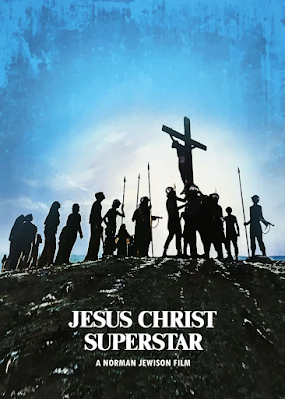
Fiddler on the Roof; The Cincinnati Kid; The Thomas Crown Affair 1968; Jesus Christ Superstar; Ice Man; The January Man; F.I.S.T.; In the Heat of the Night; A Soldier's Story; The Thrill of It All; Send Me No Flowers; ...And Justice For All; Agnes of God40 Pounds of Trouble; Best Friends; The Hurricane; Bogus; The Art of Love; In Country; The Dogs of War; Billy Two Hats; Moonstruck; The Landlord; Only You; The Russians Are Coming! The Russians Are Coming!; Dinner with FriendsThe Statement; and Other People's Money made you a legend. 

My favorite of your pictures (and believe me, this proved a hard call) is Rollerball, in which you (through William Harrison's prophetic screenplay) depicted a dystopic world not far removed from the one we now occupy. I'm not exaggerating in saying that I ruminate upon this bold, dark wonder several times a day. It resonates with me that much. 

Whatever you did, however you did it, the results were always golden. Thanks for the smiles, thrills and adventures, Mr. Jewison. Our lives would be far less enriched without you and your provocative works.  

Saturday, March 30, 2019

SO LONG, SHANE RIMMER...


To fans of Gerry Anderson's "Thunderbirds" , you were the voice of Scott Tracy, a marionette of sophistication and exemplary diligence. (You also generously granted vocalizations to Anderson's "Joe 90", "The Secret Service" and "Captain Scarlet and the Mysterons".)


In the sphere of spy hi jinks, you had a more visible touch, starring in such Bond endeavors as "You Only Live Twice"; "Diamonds are Forever"; "Live and Let Die"; and "The Spy Who Loved Me". In related espionage, you appeared in "The Holcroft Covenant"; "The Billion Dollar Bubble"; "The Bourne Identity '89"; "Twilight's Last Gleaming"; "Return of the Saint"; "A Very British Coup"; "Silver Bears"; "S*P*Y*S"; "Spy Game"; and "Dr. Strangelove or How I Stopped Worrying and Love the Bomb". 


In science-fiction, fantasy and action/adventure productions (whether for the large or small screen), you visited such submissions as "Superman: the Movie"; "Superman II"; "Superman III"; "Batman Begins"; "Warlords of Atlantis"; "The People That Time Forgot"; "Rollerball '75"; "Dark Shadows '12"; "Crusoe"; "Dreamchild"; "A Kid in King Arthur's Court"; "Doctor Who"; "The Protectors"; "The Persuaders!"; "Space Truckers"; "Space Police"; "Space: 1999"; "UFO"; "Star Wars: A New Hope"; "Morons from Outer Space"; "The Arabian Adventure"; "Day of the Comet"; "Alien Autopsy"; "The Hunger"; "Hammer House of Mystery"; "Roald Dahl's Tales of the Unexpected"; "Baffled!"; "Flaming Frontier". "Dogs of War"; "A Dangerous Age"; and "A Kiss Before Dying". 


Alas, actors of your varied caliber don't always get the recognition they deserve, but you, Mr. Rimmer, were one to remember and appreciate, no matter what the content or context. 


Thanks for the long line of impressive work and all the imaginative memories...

Thursday, July 23, 2015

An Alternate Reality #9: Rollerball (1975)


Though the story takes place in 2018, the sport of "Rollerball" was in effect years before Norman Jewison 1975 classic commences. Rollerball, like any worthy competition, focuses on teamwork, though not in the good, old fashioned way, but rather in a blurred merger where individuality is diminished in pursuit of success: perhaps not far removed from what characterizes our existing reality.


Per William Harrison's excellent script (culled from his short story, "Roller Ball Murder"), the film's premise initially mirrors "Festival": the weird celebration that appears in "Star Trek: Return of the Archons", or for that matter, similar events depicted in "Alphaville", "Deathrace 2000" and "Mad Max Beyond Thunderdome". The game offers a sadistic release from hum-drum life: a sport so selectively influential, it's replaced all of our once beloved athletic pastimes. 

"Rollerball" stars James Caan, perhaps in his most memorable role, as Houston Captain Jonathan E, a Derek Jeter equivalent within this imaginative scheme. Rollerball is based on roller derby, but its violence real, as one team attempts to insert a steel ball in shoots at each end of an enclosed arena. Rules are sparse (and later in the story, nonexistent), so that members of both teams can do whatever is necessary to win, and no one has proven more deft at such than Jonathan: for all intents and purposes, a gallant, succeed-for-the-team guy. 


Jonathan, however, is no conformist. His individuality (i.e., his ability to stand out from the crowd) inspires the spectators, which worries the U.S. based corporation that sponsors Houston. In fact, a number of global corporations also back teams, and the competitions act in lieu of wars, while reaping a profit within a global, pill-pacified society.

Jonathan's boss, Mr. Bartholomew (John Houseman), sees the threat in his hero's attributes: that Jonathan might inspire others to aspire beyond the norm. On this basis, Bartholomew and his colleagues decide it's time the warrior retire or else force him into a permanent demise. 


The likelihood of a unsavory outcome is, indeed, prevalent in this world. Jonathan witnesses his friend, Moon Pie (John Beck) fall brain dead after a bout with Japan, and prior to such, we learn that his wife, Ella (Maud "James Bond" Adams) was seized by an executive for personal pleasure, which has left Jonathan empty and confused. 

He confides in his ex-couch, Cletus (Moses Gunn), and to a lesser extent, his assigned girlfriends, (Pamela "Buck Rogers" Hemsley and Barbara "Death Moon" Trentham), but the reassurance he seeks remains elusive. Jonathan's concerns increase, and yes, it would be easier for the champion to resign than fight, but that's not what distinguishes the man. 

"Rollerball", unlike "Deathrace 2000", maintains a somber, if not ironically serene atmosphere. The sports sequences, however, are well staged, invoking an air of danger, but then the film's anthem, J.S. Bach's ominous "Toccata and Fugue in D Minor", is enough to set the tone. Still, over the film's two-hour-plus stretch, a sense of nagging desperation reverberates (with evidence of computer tampering and an erasing of history that suits the corporate providers), at least until Jonathan's revolt. Then the film bristles of boiling rage: a demonstration of how Jonathan will never succumb to those who claim they know what's best for him and his admirers.


Jonathan's introspective journey makes "Rollerball" more than just another Orwellian knockoff. Though he isn't a man of profound expression, Jonathan is observant, as Caan's understated performance conveys. He watches the precious past crumble before his eyes (savoring video footage of Ella before deleting it: a vain gesture of acceptance toward corporate demands). Such is also shown during a tense exchange between Jonathan and Bartholomew, when their guests scamper off to blaster-gun trees, oblivious to how long the majestic specimens have stood or the beauty they've long invoked. Through all this, we learn that "Rollerball'"s reality is a hollow place, where the present is perpetually present, and now with Jonathan's inclusion in the game to be snuffed, he must grasp his place in it with all his might, but how can he succeed when the corporation has stacked the odds against him?


For better or worse, "Rollerball" doesn't end decisively, leaving the door open for whatever fate may bring. A sequel may have appeared inevitable, but instead, an ill-received 2002 remake came in its wake, which placed adolescent adrenalin at the forefront. What makes the original film special is Jewison and Harrison's pensive assessment of dystopian bondage. Like "Logan's Run", the tale presents a staunch supporter of a system, who finally awakens when forced onto the losing end. It's about changing one's mind, of seeing the truth, of daring to be unique, when others insist you march to their dictatorial drum. 

Like other dystopian adventures, "Rollerball'"s message rings clearer today than at the time of its conception. This is understandable, considering our current, cultural norms. When people are encouraged to do the bare minimal, or restrain themselves from being all they can be, the need to rise to any occasion may seem fruitless, if not dangerous. "Rollerball" spits in the eye of such notions. As the great Jonathan E. learns, conformity (and therefore, complacency) is never life's answer, only its curse.