
Showing posts with label Batman. Show all posts
Showing posts with label Batman. Show all posts
Wednesday, October 9, 2024

Sunday, August 4, 2024
I saw Batman: Caped Crusader

At last, I was able to consume the entirety of Amazon Prime's Batman: Caped Crusader. As in my early-impression review (see my additional, 8/4/24 post), the series kept a 1990s flavor within the 1940s, with a juxtaposing linkage that was both brave and bold yet familiar in the classic, detective-noir mode. To say the least, I liked what I experienced, even if some of the tweaks were more than distinct.


For one, not every speck of The Caped Crusader is distinct to the 1940s, at least not the version most of us know. I guess that's okay, since this animated venture should be perceived as a parallel one. (Long live the DC Multiverse, right?)
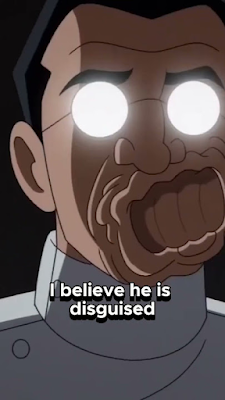
Some alterations were quite obvious, e.g. Oswalda Cobblepot, and others were just plain alarming, like Harvey Dent being a semi-unethical, disrespectful jerk to attorney Barbie Gordon. What's then the point of turning him into Two-Face? Then again, maybe that is the point. He possessed the short-fused seeds all along, and only needed a little acid for them to sprout. (Okay, I must come clean, I found his Hyde-bound outrage most invigorating, perhaps the most identifiable yet for dear ol' Dent.)


Other parts of the series were, in fact, touching, as with the bond formed between Jim Gordon and Batman in the Firebug installment. Others were packed with gleeful or haunting breeziness, as with Selina Kyle's stealthy thievery and Natalia Night's ravished, Bradbury draw, while others were hits-home disturbing, like Onomatopoeia and Floyd Lawton's relentless, assassination attempts and the dark-haired Harleen Quinzel's transformation into a creepy automaton who reigns over a menagerie of mirthful madmen. (I also fancied the Adam Anti-ish Gentleman Jim Craddock, Waylon Jones' carny cameo, the Joker's chemical cameo and how about that King Tut variant in Quinzel's grasp! Heck, why not? Let's face it, in the scheme of this show, the swinging, alternate 1960s aren't that far off.)

The pulpiest episode by far featured Basil Karlo, aka Clayface, who became pliable through a Jack Pierce-inspired make-up artist (who, in turn, may have sprung from Robert H. Harris' Pete Dumond of How to Make a Monster). That rumor has it that Clayface may be the prime antagonist in Matt Reeves' The Batman: Part Two (and Reeves is an exec producer of this series) makes me wonder if the Phantom of the Opera/Shadow persona presented might not morph into a live-action equivalent. (Then again, it was once believed that Batman: The Animated Series' Patrick Stewart-imprinted Mr. Freeze was a sealed deal for Batman & Robin, before we got Arnold Schwarzenegger's bulky chrome.)

The main thing is that nothing was too out of whack for the sake of this "reinvention." Therefore, this new, Batman series has huge, ongoing potential. I'm assuming that the ten (Season 1) episodes are but a snug warm-up, and if so, this one could go down as the best yet in the Dark Knight's animated annals, but only the years and deeper rumination can (and shall) foretell.

Sunday, September 24, 2023

Sunday, June 12, 2022

Thursday, April 7, 2022
Collectible Time: Before the Batman (A Novel Prelude)

For whatever odd reason, Before the Batman's author goes uncredited. though a chap named David Lewman appears to be the raconteur, thanks to a revelation shared by reviewer, Renaldo Matadeen. (The novel is otherwise attributed to publisher, Random House.) The ambiguity is fine, since many mainstream novels these days aren't penned by the names plastered on them. At least with Before the Batman, readers get a cracklin' good tale, no matter the assigned benefactor. (That the publication includes a pull-out movie poster and eight pages of related images only sweetens the collectible pot.)

To satisfy fans of Matt Reeves' blockbuster, Before the Batman grants a generous glimpse into Bruce Wayne's adolescent span (and a slight stretch beyond that), as well as enacting Edward Nashton's resentful, orphan-based rise. Alfred Pennyworth, Carmine Falcone and Oswald Cobblepot also visit (no surprise there), though they're more cameo-relegated than layered personas for this coming-of-age adventure, with the paternal Pennyworth a tad more in the forefront than the others.

Additionally, readers are treated to a warm-up Selina Kyle, a reckless, young lady named Dex, aka Dorothy Alexander Starling, who becomes Wayne's kinda-girlfriend and could go either way within Gotham's good-vs-evil bracketing.

To further the DC/WB origin rebuilding, Before the Batman touches upon Wayne's penchant for fast cars. This gives a particular interlude a swell, Rebel Without a Cause vibe. (Incidentally, traces of Batman: Year One follow the revving segment: a welcome touch for those well versed in modern DC.)

Pre-Riddler angst dominates at least half the story, featuring the jealousy and spite that reaches fruition in Reeves' movie. The ingredients don't lend a heavy hand to the Riddler's mythology, but the execution gives readers a respectable, founding vantage at what makes Nashton tick in the ways of the haves and have-nots. As well, the text references his itch for explosives (ah, yes, the vindictive shape of things to come).

Some claim that Before the Batman is more a "junior" read than a novel for adults. If so, so what? It entertains. For those who take offense that an "adolescent novel" might act as a tie-in for such an unyielding movie (and there are more than a few jugheads now spouting such), well, they can crawl under the nearest, boycotting rock. Before the Batman supplies essential girth for canny, Caped Crusader connoisseurs of all ages. In other words, it ain't gonna hurt nobody.

And for those who prefer an audio reading, Will Damron's dramatic elocution is worth the pursuit. It breezes by with a film's fast flow (not unlike a quality radio show), stoking images that will charge one's mind with villainous scorn but more so, valiant elevation.

Thursday, March 3, 2022
I saw The Batman...

Writer/director Matt (Let Me In) Reeves' The Batman is a hefty and somber piece of cinema, a throwback to Christopher Nolan's Dark Knight trilogy, but with a Gotham-early-years angle, which includes a new kid on the block, the moody and brooding (James Dean-ish) Robert (Twilight) Pattison.


The Batman is also Batman: Year One (okay, more so Year Two, with allusions to Hush, Mask of the Phantasm and The Long Halloween), but with its own twist, as it also emphasizes the Riddler's entrance as the inquisitive, Bane/Zodiac-like, Edward Nashton (or is he?), portrayed by the ultra-edgy Paul (The Good Heart) Dano. Along the illicit way come big-time criminals, the Penguin, aka Oswald Cobblepott (aka Oz), played by the unrecognizable Collin (Daredevil) Farrell, and Carmine Falcone, played by John (Secret Window) Turturro.


Through the Riddler's nudges (fierce and as one comes to learn, distinguished by clever duality), the story (co-composed by Peter {The Hunger Games} Craig) unveils perceived police corruption, but through this claim, the classic villain creates great, contradictory dilemma, leaving Bruce Wayne no choice but to crush his vexing adversary before more casualties occur.

Zoe (Fury Road) Kravitz's Selina Kyle/Catwoman slinks into the mayhem to lend a helping claw: sexy, sweet and upon occasion, as enigmatic as the Riddler, with intriguing links to Cobblepot and in particular, Falcone. There's distinct chemistry between Pattison and Kravitz, which makes the mythic romance between Bat and Cat feel like something that's always been there and always will be. That's what faithful fans desire.

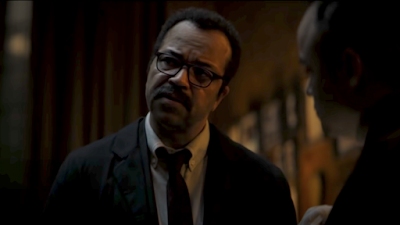
The same can be said of the bond between Wayne and Jeffrey (James Bond/Westworld) Wright's commendable James Gordon. The policeman is a conscientious agent who, like the rising Dark Knight, wants to nab the Riddler and the sooner, the better.

To solidify the movie's camaraderie, Andy (Planet of the Apes/Lord of the Rings) Serkis' Alfred Pennyworth gives Wayne the guiding light he needs to rise from out the dark to accomplish his mission. Serkis' portrayal is essayed much in the manner of Michael Caine's in the Dark Knight trilogy and Sean Pertwee's on Gotham: careful, parental and guru-like (ideal traits to mold an ideal vigilante).


In light of the aforementioned attributes, it may appear that The Batman is a message movie. Perhaps it is, but then so are most police dramas, no matter the uniforms featured. These productions promote the need to make society just and noble when circumstances dare to crumble, and sometimes, as one discovers in Sidney Lumet's Serpico (and for that matter, Oliver Stone's JFK, which The Batman sometimes mirrors), they reveal an unexpected festering beneath their bases. The Batman is no exception to that respectable rule.


Even with this said, The Batman's slant isn't as overtly conservative or philosophical as Nolan's epic chapters, but again the same somber tone prevails in its detective-noir context: always earnest, angry and crusade-ridden (rather like Reeves' Planet of the Apes entries, now that I think of it). That Reeves keeps the pensive ingredients in check solidifies the story's impact, and clocking in at three hours, it streams, punches and roars (thanks in large part to a cool, Batmobile prototype in a Pengy, Bullitt-fueled chase and Michael {Spider-man: No Way Home} Giacchino's death-marching, Ave Maria-laced score). It all builds razor-sharp tension from beginning to end.


For the sake of another Batman re-introduction, this one works: never too rehashed and never too reinvented. Well-rounded Caped Crusader fans will demand a "next year" sequel, which is unquestionably in the works, as its sinister, Arkham cameo joyously conveys.

Wednesday, October 20, 2021
An Alternate Reality: I saw Injustice...

DC/WB's newest, animated endeavor, Injustice, is based on the top-selling, Gods Among Us video games and Tom (Suicide Squad) Taylor's prequel, comic-book saga, even though these sources have thus far eluded me.


I found Injustice entertaining enough, perhaps because I had no choice but to enter it cold. However, I can only go so far liking stories that turn heroes into villains for the sake of instilling some clever contrast. (Even The Boys rattles me on occasion for all its flippant self-assurance.) Anyhow, it bothers me when good guys go rogue, no matter the melodramatic spin, and seeing Superman and Wonder Woman turn Zod/Ursa-like (even per understandable, if not logical, prompts) was surreal in a nightmarish way. (Heck, The Flashpoint Paradox proves problematic in the same way for me, even though I hold it in high regard.)


I also have trouble when heroes who've been depicted as friends betray one another or slug it out due to philosophical differences. Sure, I found Batman v Superman digestible (Captain America: Civil War, too), but as a rule of thumb, ironic, "good-vs-good" clashes (whether by DC or Marvel) are plagued, or perhaps anointed depending on my mindset, by great ambivalence. Injustice contains many such tug-of-war clashes, to the point that it was hard for me to decide which side was the better (or lesser) of the conflicting coin: a disturbing sensation, and still I watched with bated breath.


To hoist to the perplexity, the story's rifts include cherished, all-American favorites riding the unorthodox edge, not only Superman and Wonder Woman, but such analogous icons as Batman, Nightwing, Robin (Damian Wayne), Catwoman, Aquaman, Hawkman, Cyborg, Supergirl, Jonathan (Pa) Kent, Starman, Shazam, (Captain Marvel), Captain Atom, Plastic Man, Mr. Terrific (Michael Holt), Green Arrow, Green Lantern (Hal Jordan), et al. There's also Amazo, a mechanical menace who gives Superman IV's Nuclear Man a mega run for his destructive money, but his manifestation stews from a peculiar, protective plan, congruent with the story's character upheaval.


For what it's worth, Batman stays pretty much in sync with his somber side, but even so, he's embroiled in a kind of distrusting contention (as he presses to topple the Man of Steel) that runs against his attentive grain, making his inclusion awkward in the story's later phases (in the pacifist-cusp vein), and I don't like the Dark Knight awkward, even if Anson (The Inhumans) Mount (who was once a contender for a live-action Caped Crusader) grants him an adjuring voice.


The Joker, on the other hand, is Injustice's counterpoising rescuer for the time he lasts, mainly because he doesn't flinch from his old, sadistic self, and how he leads Kal-El to cause Lois Lane's demise is but par for his sick course. (Beforehand, the Clown Prince of Crime dispatches shocking attacks on Jimmy Olsen, the Flash and all of Metropolis.) Because of the villain's carryover craziness, I was more at ease with him than any other character (though Harley Quinn, Ra's al Ghul and Mirror Master also ride a restful road), but why should I be okay not rooting against Bruce Wayne's pinnacle arch nemesis, especially when he takes his impulses to the apex of offense? Evil is evil, right? (I suppose that's Superman and Wonder Woman's point.)

In the film's indubitable favor, Matt Peters' direction and Ernie Altbacker's script do speed the reformist procession along in such a way that its harshest parts don't sting for very long (and Nightwing's transcendental, Deadman alteration and Plastic Man's impertinent observations nearly blunt the subsequent mourning), but once the imposing ugliness is etched, it's impossible to erase, despite the plot inserting a shaky reconciliation. (Incidentally, the movie's Superman-v-Superman moment is the misadventure's staggering turn, but its attempt to set the Kryptonian's stance straight falls short of Superman III's dueling irony and inference.)

I felt obligated to add Injustice to my disc library. I'm not ashamed to place it alongside other such offbeat, DC revisions. I take it for the indignant thing that it is, and though it often rocked me to the moral core, I'm bound to revisit it: a grim confession that screams contradictory but sincere volumes.

Subscribe to:
Posts (Atom)