Showing posts with label Rod Serling. Show all posts
Showing posts with label Rod Serling. Show all posts
Friday, May 9, 2025


Wednesday, April 9, 2025
MR. LOBO'S CINEMA INSOMNIA: IN SEARCH OF ANCIENT ASTRONAUTS, SATURDAY NIGHT

This Saturday night (April 12, at 10pm, on Twitch, OSI74/Roku and Amazon Fire) Mr. Lobo's Cinema Insomnia presents the 1973, television production, In Search of Ancient Astronauts: a recut edition of 1970's Chariots of the Gods? adaptation, which also stands as a helpful forerunner to 1975's The Outer Space Connection and is the reputed basis for Leonard Nimoy's In Search Of series.

The documentary covers all the juicy insights of Erich von Daniken's book, as (re)directed by Harold Reiml and restructured by writer Don Ringe. It's also uplifted by Rod Serling's narration, which gives this special redux a nice brush of credibility.


The presented theories and their supporting artifacts are, indeed, fascinating, ranging from amazing, ancient batteries to mysterious, landing fields to odd, golden-helmeted figures to weird, high-tech gears found under the sea, all of which fuel the conjecture that extraterrestrials visited Earth long ago.


Mr. Lobo links the documentary's chapters with alien-orbiting trailers and thanks to the Freedom of Information Act, an investigative prowess that allows him to bypass many governmental secrets. He also takes a stroll through an Area 51, auto-parts spot: a venture that proves a little more terrestrial than not. But fear not, for a "veritable" alien does drop by to conduct a little (ahem) probing, and if that doesn't tickle one's fancy, Mr. Lobo interviews the one-and-only Richard Hatch of Battlestar Galactica.

The edifying flow of In Search of Ancient Astronauts may differ from other Cinema Insomnia episodes, but that doesn't make it any less "misunderstood" and therefore, every bit worth a view this Saturday night.

Sunday, June 12, 2022

Friday, June 3, 2022

Wednesday, June 1, 2022

Wednesday, December 23, 2020

Wednesday, December 16, 2020
HAPPY 50TH NIGHT GALLERY

"Rod Serling's Night Gallery" premiered as a weekly anthology on December 16, 1970, after an acclaimed, NBC pilot aired the year prior. Though Serling wasn't granted the creative control he desired (and held a contentious relationship with producer, Jack Laird), "Night Gallery" still stands as the closet in tone to the original "Twilight Zone": a genuine, companion piece.

Many of its episodes are considered as good as "Zone'"s best, including "Eyes"; "The Cemetery"; "Escape Route"; "They're Tearing Down Tim Riley's Bar"; "The Caterpillar"; "The Messiah on Mott Street"; "The Last Laurel"; "The Painted Mirror"; "Make Me Laugh"; "Brenda"; "The House"; "Fright Night"; "Cool Air"; "Pickman's Model"; "Return of the Sorcerer"; "Death on a Barge"; "Pamela's Voice"; "The Sins of the Fathers"; "The Little Black Bag"; "Lindermann's Catch"; and "Finnegan's Flight". The series even spawned a semi-sequel to "Eye of the Beholder": "The Different Ones".


The series incorporated padded footage (beyond Laird's comical, "filler" bits) for its original, syndicated run, even going so far as to embrace Richard Matheson's underrated "The Sixth Sense", but has since been restored for television and DVD releases in its intended form.


The show's paintings, which Serling used to introduce the stories, have become the stuff of macabre legend: beautiful and haunting, as much as they're disturbing. (Their accompanying who's-who, celebrity line-up is equally noteworthy.)


I love "Night Gallery" and so should you. Engage its installments and be absorbed.

Saturday, September 28, 2019
HAPPY 60TH TWILIGHT ZONE!!!

On October 2, 1959, one of the most acclaimed, television series of all time premiered on CBS: Rod Serling's "The Twilight Zone".


Serling and his handpicked writers generated a wide range of intriguing topics, often tipped by thought-provoking irony.


Though most recall the twists, the series gained devotees through its projection of humanity and staunch, moral stances, as presented through such episodes as "Walking Distance"; "A Stop at Willoughby"; "Night of the Meek"; "Changing of the Guard": "In Praise of Pip"; "Passage for Trumpet"; "One for the Angels"; "Showdown with Rance McGrew"; "A Nice Place to Visit"; "Time Enough at Last"; "Mr. Bevis"; "Eye of the Beholder", "The Monsters are Due on Maple Street"; "The Shelter"; "The Fever"; "Dust"; "Mr. Denton on Doomsday"; "A Hundred Yards Over the Rim"; "The Dummy"; "The Lonely"; "The Mighty Casey"; ""Where Is Everybody?"; "The After Hours"; "To Serve Man"; "It's a Good Life"; "Last Night of a Jockey"; "Nervous Man in a Four Dollar Room"; "Dead Man's Shoes"; and "The Big, Tall Wish".


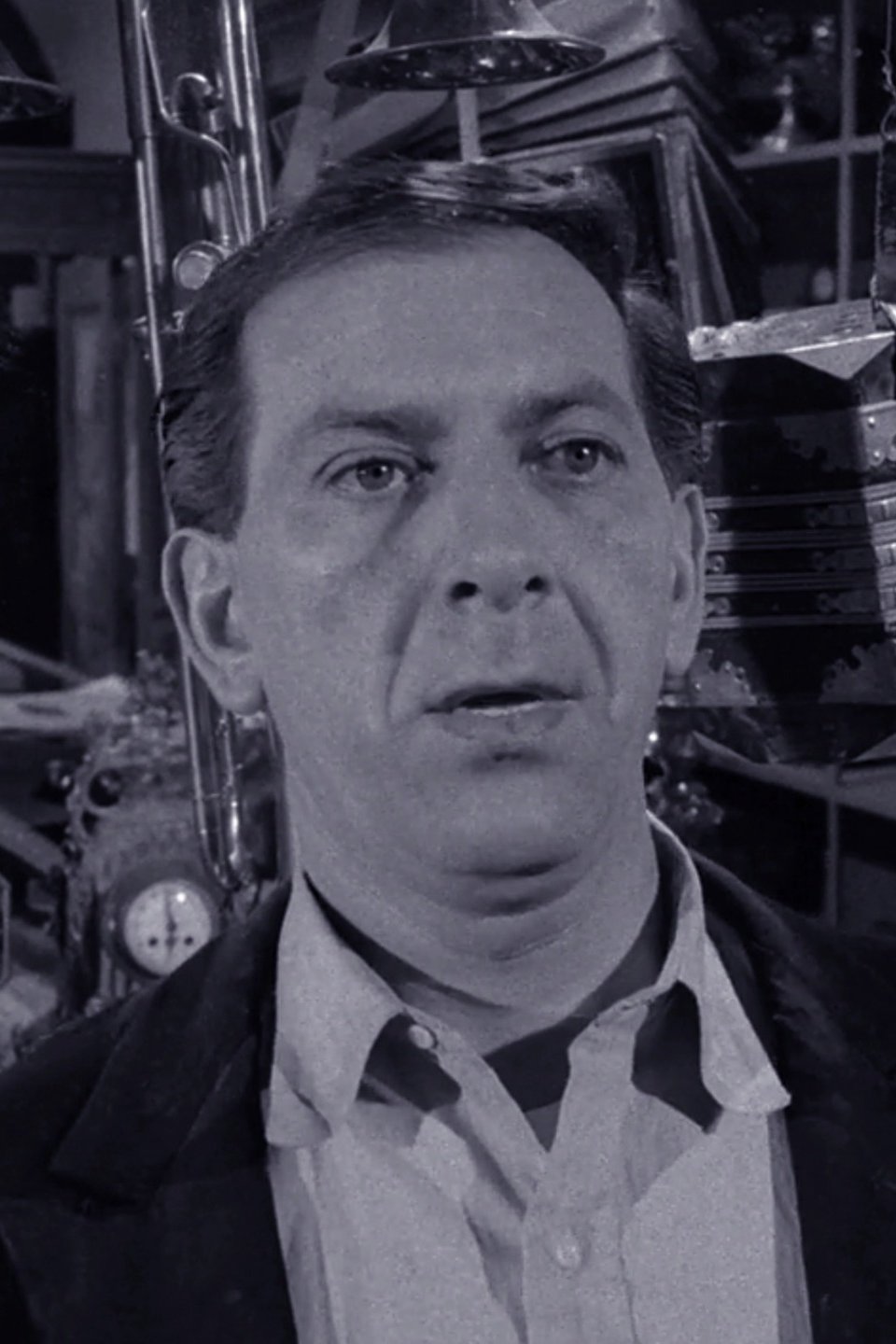
Serling's crisp dialogue was also an empowering plus: an ideal springboard for actors to emote. The queue is impressive: Jack Klugman; Jack Warden; Gig Young; James Daley; Art Carney; Ed Wynn; Cliff Robertson; Ivan Dixon; Anne Francis; Burgess Meredith; Orson Bean; Dan Duryea; Martin Landau; Earl Holliman; Donald Pleasence; Everett Sloane; Larry Blyden; Sebastian Cabot; Warren Stevens; Joe Mantel; Mickey Rooney and many more.


"Twlight Zone" is odd and eerie, but more so a place of comfort. The anthology never fails to hit the spot after a long, arduous day. That's because its content, though fanciful about the fringes, embodies everyday life.


Other incarnations have followed Serling's foundation and earned their own loyalty and respect, but the original established a pinnacle that will never be eclipsed. My life is all the better for Serling's brainchild, and there's no doubt that a legion of others hold the same opinion.

Monday, March 18, 2019
CBS' New Twilight Zone: A Serling Homage or Redundant Reinvention?

If I want to watch CBS' "Twilight Zone" revival, I'll have to pay. Right now, that's not going to happen.


Rod Serling's original vision is rich in conceptualization and open to expression in such a way that nearly anyone can learn from and enjoy it. The same can be said of prior "updates", which I consider edifying and entertaining, even if on the whole they can't eclipse the original. (Why not toss "Night Gallery" in there, as well? With the exception of the 2002-2012 radio show, it's more of a companion piece to Serling's emanating source than the others.)

Though another "Twilight Zone" was inevitable, we now roam an injudicious age where proven concepts are tilted to favor misinformed agendas and radical revolts. "Star Wars" is no longer thematically a good-vs-evil saga, but one of garish gray. "Star Trek" is serialized and confined to confounding contradictions, which must have the Great Bird of the Galaxy's ashes turning over in their urn. CBS (whether in regular or streaming form) is no stranger to this vexing reinvention game. Would a new "Twilight Zone" (set to transmit April 1) reject the nauseating novelty?

Though I'm not brimming of optimism, I do believe that the talented Jordan Peele (as host or otherwise) could still do right by us--us old-timers, that is. Unlike today's myopic, mind-controlled youth, we who've sprung from the past see from various vantages when it comes to irony, characterization and allegorical depth. (We don't condemn or censor shows like "All in the Family", "Good Times" and "Sanford & Son". We memorialize them.) We, therefore, are the indigenous, soulful citizens of quality television, which includes the classic "Twilight Zone", but will that "wondrous land whose boundaries are that of the imagination" now wish us into Anthony Fremont's dreaded cornfield?

I'll wait for some feedback on this latest edition's vibe. If it's positive, maybe I'll latch on before a freebie opportunity arrives. For now, I can only hope and pray that Serling's spirit keeps this "remake" in conversant, thought-provoking check.

Wednesday, February 7, 2018
HAPPY 50TH ANNIVERSARY PLANET OF THE APES!!!

February 8, 2018 marks the 50th Anniversary release of "Planet of the Apes". The premiere commenced at New York's Loew's Capitol Theatre and the 72d Street Playhouse, with wider distribution following in March, which then expanded into the spring and summer, where it ruled the drive-in theater circuit.

Thanks to producers Arthur P. Jacobs and Richard D. Zanuck, "Planet of the Apes" offered an imaginative and sometimes frightening observation of our world through a parallel-reality lens, and unlike a recent polarizing, space adventure, it wasn't one-sided or propagandist. The story was identifiable to all who viewed it, no matter what their ideological bent, which is perhaps why the movie sparked the world's pop-cultural consciousness and birthed four, theatrical sequels, in addition to further incarnations that continue to this day.

If the truth be known, "Planet of the Apes" is, for all intents and purposes, a "Twilight Zone" tale, and of course, Rod Serling's involvement in the Pierre Boulle "Monkey Planet" adaptation confirms that. Like the best "Twilight Zones", "Apes" is an essay of irony, truth, deceit, rejection, hope, life and death. It also offers crisp dialogue, crackerjack direction by Franklin J. Schaffner, a powerful soundtrack by Jerry Goldsmith, and a cast like no other, with characterizations that still remain unsurpassed. Oh, and how 'bout that ending! The most iconic in all of cinema history!
If you haven't watched the original in a spell, or by some perplexing chance have never seen it, give yourself an edifying treat with a (re)visit. There are few films (if none) that can match this one and the legacy it spawned. It deserves its classic status and stands as the ultimate blueprint for how allegorical fables should be told.
Long live "Planet of the Apes"!!!

Subscribe to:
Posts (Atom)