Showing posts with label Paul Naschy. Show all posts

Thursday, March 27, 2014

Monster Team-up Reflection #11: Werewolf vs Vampire Woman


Though the official fifth in Paul Naschy’s Waldemar Daninsky series, “The Werewolf vs the Vampire Woman” (aka, “La Noche de Walpurgis”, “Blood Moon” and “Werewolf Shadow”) remains prominently lodged in many fans’ memories, if only due to the affluent exposure it’s received over the years. By title alone, it invokes pure exploitation (like “Werewolves on Wheels”, which was also in successful circulation during the early ‘70s), but in truth, this ’71 epic is more an excursion in subdued creepiness than extreme flamboyance.


The film, (directed by Leon Klimovsky, who would later helm “Dr. Jekyll and the Werewolf”, and written by Naschy and Hans Mukel), focuses on a couple of sight-seeing lovelies (Gaby Fuchs and Barbara Capell), who are seeking the castle of legendary Countess Wandesa Darvula de Nadasdy (Patty Shepard): a character based on Elizabeth Bathory (the real-life Countess Dracula). While attempting to get directions, the women stumble upon Daninsky, who graciously lets them stay in his castle, where (much to their torment), his weird and violent sister (Yelena Samarina) also resides.


When one of the women (Capell) injures herself by pulling a cross from out the Countess’ disinterred corpse—and profusely bleeds upon it—matters quickly turn surreal. Wandesa, now magically revived, proceeds to transform her unintentional resurrectionist into a faithful, parasitic companion: an act punctuated by implied lesbianism, which was a common motif in horror films of the period (e.g., “Daughters of Darkness”, “Vampire Lovers”, “Vampyros Lesbos”). As a consequence, the altered victim becomes as much an occupying force in the storyline as Wandesa.


With the exception of the prologue and two midway transformation scenes, Daninsky basically haunts the sidelines, only significantly intervening toward the tale’s conclusion, and then when the inevitable confrontation with the Countess occurs, he again predictably turns lupine, while she does little more than swoop down upon him, so that they may briefly roll around the dirt: alas, a far cry from cinema’s best monster brawl. (Clips from the “fight” can also be viewed in the film’s opening credits.)

However, what makes “Werewolf vs Vampire” worth watching is its lush, visual ambiance, thanks to cinematographer Leo Williams. Arguably more than any other early Daninsky vehicle (with the possible exception of “Jekyll vs Werewolf”), “Werewolf vs Vampire” exudes the Hammer Studios flow and feel, remaining engrossingly atmospheric and ethereally alluring throughout and does an exemplary job catering to the fanged females, who are so magnetically photographed that it’s understandable why one might willing offer one’s neck to them.


“Werewolf vs Vampire” is also another fine example of how sensuality and splatter can successfully blend: a feature that would be further pronounced a few years later in Naschy’s “Night of the Howling Beast”/”Werewolf and Yeti”.

Because of its impressive box-office gross and its easy access via VHS and disc, “Werewolf vs Vampire” has become Naschy’s most referenced film (though some might justly argue “Mark of the Wolfman”/”Frankenstein’s Bloody Terror” rivals such). Also like other drive-in staples over the decades, such as “Giant Leeches” and “Killer Shrews”, “Werewolf vs Vampire” has certainly gained pop-cultural status in various eclectic circles, and on that basis alone should be particularly sought among Naschy’s extensive work. It also aptly grants one a hardy glimpse into Naschy’s story-telling style: an undeniable blueprint for why his films, particularly the werewolf ones, continue to enthrall.
 

Monster Team-up Reflection #10: Dr. Jekyll and the Werewolf


Some claim that Robert Louis Stevenson's "Strange Case of Dr. Jekyll and Mr. Hyde" is, in fact, the first mainstream werewolf story. Sorry, but I've never bought into this, even with "Werewolf of London" distinctly grazing upon the notion. The way I see it, there are many shape-shifting elements among various monsters, and Edward Hyde is but one result.

However, there is justification in making the werewolf connection to the Stevenson classic when it comes to horror icon, Paul Naschy, for he concocted such an official cinematic mix in "Dr. Jekyll and the Werewolf (aka, "Dr. Jekyll el Hombre Lobo", "Night of the Blood Wolf"), directed by Leon Klimovsky (who previously helmed "Werewolf vs Vampire Woman". penned by Naschy, released in '72 and the sixth in the Waldemar Daninsky franchise.


"Jekyll and Werewolf" is not a traditional monster-meets-monster merging, in that Naschy's werewolf never battles Hyde, but rather it's through an ill-fated cure that Hyde temporarily manifests in lieu of Daninisky's famous, furry alter-ego.


The first half of the modern-day yarn actually deals with a couple visiting the "old country" and the husband (Jose Marco) being murdered by thugs, leaving his fetching wife (Shirley Corrigan) to be rescued by Daninsky just before a potential rape. Daninsky grants her sanctuary, and from there, she falls for her gallant host, even though she is well aware of his lycanthropic affliction.

Angry villagers wish to do Daninsky in, but ultimately he flees with his lady fair to London, where she pleadingly approaches the grandson of Dr. Henry Jekyll (Euro-horror star, Jack Taylor) to remedy her man of his bestial tendencies.

 
Jekyll agrees and with the help of his lovely but jealous assistant (Mirta Miller, who also costars in Naschy's "Count Dracula's Great Love") proceeds to do just that. As such, when the moon turns full, Daninisky's wolf guise is replaced by the sinister scowl of a new Mr. Hyde!

Waldemar Hyde aptly captures all the crass behavior we'd expect from Stevenson's incorrigible fiend, and Naschy gets a fair sum of contemptuous mileage out the part, at least until Jekyll meets an untimely end and Daninsky's lycanthropy returns full force.
 
"Jekyll and Werewolf" is one of the best looking Daninsky efforts, with splendid cinematography by Franciscus Fraile, in both the rural and hip London scenes. Also, Corrigan and Miller offer an ample amount of eye-candy throughout the story. It's really hard not to gawk at them whenever they grace the screen.


On the other hand, the film may have benefited by being a bit longer, particularly when it comes to the actual monster footage, but overall, "Jekyll and Werewolf" is a solid try and at least grants quality moments to the antagonists. The scene where Daninsky grows furry alongside a nurse in an elevator, as well turning from Hyde to Wolfman in a psychedelic disco, are memorable and certainly two of the best moments in the entire franchise.

Above all, the atmospheric Hyde segments make one wonder what Naschy may have accomplished if he had simply concentrated on a straight-forward retelling of the Stevenson tale. If only rendered, there's a strong chance it would have gone down as one of the best film adaptations, but at least we get a taste of what he could do with the subject matter via this particular fun-filled merger.
 

Wednesday, March 26, 2014

Monster Team-up Reflection #9: Night of the Howling Beast/Werewolf and the Yeti


Recently I reflected upon Paul Naschy’s “Assignment Terror” and thought it might be fun to bring another of his monster mergers to the blog spotlight: “Night of the Howling Beast” (aka, “La Maldicion de la Bestia”, “Werewolf and the Yeti”, “Hall of the Mountain King”, et al), the eighth entry in the Waldemar Daninsky series, directed by Miguel Iglesias and scripted by Naschy (as Jacinto Molina).

The film was released in ’75 (though not officially in the U.S. until ’77, and then only limitedly) and has since gained greater exposure through VHS and disc. It’s generally considered one of the most violent installments in the Daninsky franchise and was even relegated to Britain’s banned “Video Nasties”, thus furthering its notoriety. In truth, “Howling Beast” is probably no more extreme than others of its kind made during the same period: graced by several gruesome moments and some brief nudity within its 80-minute time frame.

 
The film is also another specialized re-imagining of Daninsky’s affliction, for in this instance, he obtains his lycanthropy through vampiric means. (For what it’s worth, “Fury of the Wolfman” and "Werewolf vs the Vampire Woman" reference a yeti bite as the cause of Daninsky’s physiological change, leaving “Howling Beast” in opposition to what was an already widely embraced origin.) There’s also, of course, the anticipated match between Naschy’s werewolf and a wandering abominable snowman, who is otherwise seen momentarily in the pre-credit prologue, where the creature mercilessly attacks an expedition, but then remains unseen until the ending.

Naschy’s script is basic, though seemingly unconnected in parts: Daninsky, who holds an interest in yeti lore, learns of the ill-fated expedition and embarks to verify its details. He gets lost in the process and is given shelter by two, beautiful cave-dwellers, who just happen to be vampires (or at least a flesh-eating variation of such). Daninsky slays them, but not before they inexplicably infect him with the lycanthropic strain. Daninsky frantically flees the dwelling, ultimately transforming into a werewolf and mutilating a few local rogues, until the spell temporarily subsides.


Meanwhile, Daninsky’s expedition members are seized, tortured and slain by bandits led by a Tibetan tyrant named Sekkar Khan (Luis Induni), who is plagued by a skin disease (his back frequently blisters, though the rest of him remains illogically unblemished). He is, in fact, receiving “treatment” from a Dragon Lady-type named Wandesa (Silvia Solar), who sadistically skins captive, young women and places their hides upon thug’s wounds in a questionable attempt to heal him. Daninsky eventually combats Khan, while Wandesa’s captives rebel, and no sooner do the villains meet defeat, Daninsky resumes bestial form, just as the yeti conveniently returns, granting us the long awaited monster melee (as well as a surprising turn regarding Daninsky’s condition).

Except for a few fleeting facial shots, the yeti is never distinctly defined (whether in the prologue or the brawl), most often resembling an elongated blur, with the werewolf staying fairly succinct throughout all sequences. Also, none of the proceedings take place in just one day or night, which considerably skews the “Night of…” designation. Daninsky also transforms initially during what appears to be dusk, only later to morph under the full moon. Unfortunately, such unexplained causes-and-effects give “Howling Beast” an uneven mythological flow.
 

On the plus side, the Himalayan setting gives the film a prevailing, exotic look, distinguishing it from other Daninsky ventures (including “Fury of the Wolfman”, which contains only a few murky Tibetan flashbacks, and Universal’s classic, “Werewolf of London”, which also makes effective use of such terrain, in addition to founding several “Howling Beast” plot points).  Naschy’s make-up, though certainly in sync with his previous applications, looks strikingly more devilish in this outing, his ears often horn-like, his mouth messily blood-drenched. Seeing his dark form sprint about the stark snow also presents an intriguing visual contrast, creating one of the movie’s most atmospheric, recurring attributes.

There are certainly superior Daninsky entries, but “Howling Beast” more than adequately holds its own, if only for its edgy violence and unapologetic adult content. As far as monster team-ups go, it’s a far stretch from “Assignment Terror” (or even “Dr. Jekyll and the Werewolf” and “Werewolf vs the Vampire Woman”, which spend better time blending their monstrous mixes), but in the end, after watching the hairy beasts go claw-to-claw, one can’t help but feel ferociously empowered.

Monster Team-up Reflection #8: Assignment Terror


My favorite "House of Frankentstein"/"House of Dracula" knock-off is "Assignment Terror" (aka, "Los Monstruos del Terror" and "Dracula vs Frankenstein", though the latter shouldn't be confused with the Sam Sherman/Al Adamson drive-in staple of the same name).

For the record, "Assignment Terror" is a German, Italian, Spanish co-production, directed by Tulio Demicheli, Hugo Fregonese and Eberard Michensner) and written by Paul Naschy (under his real name, Jacinto Molina), under the working title, "The Man Who Came from Ummo". It was released in '70, but made its U.S. debut via syndicated television.


It was also the first Naschy sequel released after "Mark of the Wolf Man"/"La Marca del Hombre Lobo" (with a more immediate, alleged French follow-up never reaching actual circulation.) Nonetheless, "Assignment Terror" swings Naschy's Waldemar Daninsky character back into action, delivering him into a modern world (graced by a  hip, jazz score), and (joy of joys) surrounded by fellow monsters.


The story is actually not only a monster gathering (or rather an impression of their legendary counterparts), but includes a plot that could have been spliced from Edward D. Wood's "Plan 9 from Outer Space" and Joseph M. Newman's "This Island Earth": Extra-terrestrials from the Planet Ummo wish populate Earth and promptly resurrect three, brilliant scientists to assist with the scheme. The catch is: the scientists will first re-animate a group of monsters (and from there, evidently, make more of the same, after the creatures' physiological constitutions have been thoroughly evaluated) to ensure the invasion's success.


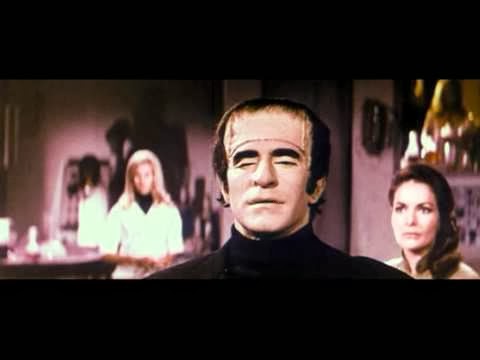
On this basis, Naschy's anti-hero werewolf, Walemar Daninsky, is resurrected purely through scientific means, along with a Frankenstein Monster, in this instance named the Franken-Science Monster (interestingly enough, portrayed in most part by Naschy, or is it really Ferdinando Murlo? You got me), a mummy named Tau-Tet (Gene Reyes), and a vampire named Count de Meirhoff (Manuel de Bilas). (Reference to a golem is made earlier in the story, which as it stands, comes off as a lead-in to the Franken-Science Monster's genesis, but in truth, funding dissipated on the production, and so the clay creature was dropped from the plot, along with some potential, alien craft footage.)


For cinema traditionalists (particularly Universal fans), it may be nice to know that the monsters are essentially represented as one might expect, featuring only subtle changes, with Naschy's Daninsky again resembling Lon Chaney Jr.'s famous lycanthrope; the Franken-Science Monster having a distinct Karloffian flair; while the Tau-Tet's face is gray-skinned and dark-eyed, with de Meirhoff sporting a slightly modern Barry Atwater/"Night Stalker" flair.

Playing the lead scientist/alien confidant, Dr. Odo Warnoff, is none other than Michael Rennie (known to film fans as Klaatu in the original "Day the Earth Stood Still" and the mechanized time-traveler in "Cyborg 2087"), who adds an irrefutable element of class to the proceedings, while further enhancing the film's permeating science-fiction angle.

During the yarn, Daninsky and one of the scientists (Maleva Kerstein, who resembles the lovely lady in the film's primary poster) become smitten with each other, which does momentarily slow the pacing, and the proceedings are ultimately investigated by a police inspector (Craig Hill), but in the end, all hell expectantly and thankfully breaks loose, leading to the various crossings of the monsters, though not actually between the Franken-Science Monster and de Meirhoff (as one of the alternate titles would otherwise suggest). Hands-down, the best confrontation is between the Daninsky and Tau-Tet, which concludes in a most memorable way. In truth, it may be the film's best moment.


Some claim "Assignment Terror" would have been better off without the alien-invasion concept, and indeed, it could have merely revolved around Warnoff gathering the monsters for an evil, earth-bound crusade. On the other hand, the invasion backdrop does spice the tale, allowing it not only to pay homage to Universal monster flicks, but to '50s science-fiction jaunts. On this basis, it's really too bad that the budget didn't allow for more insight into Planet Ummo, since it's largely dialogue, and some occasional high-tech, Kenneth Strickfaden-type equipment, that stands in lieu of such.

Also, its proves disconcerting that Rennie's voice is apparently dubbed, when the need was utterly unnecessary for the American version, as does the scientists subplot, which ultimately goes nowhere. There's also a carnival-front motif at the film's start, which could have been atmospherically effective if stretched, but for whatever reason, was inexplicably shortened.


Overall, "Assignment Terror" does at least take itself seriously, and its script (even though awkwardly altered along the way of filming) certainly shows Naschy's love for classic monsters.

Sam Sherman, who had a chance to help distribute the film more effectively, chose instead to alter "Mark of the Wolf Man", so that it became "Frankenstein's Bloody Terror", due to a contractual agreement to deliver a Frankenstein movie, thus relegating this particular team-up film almost to obscurity. Though Sherman evidently didn't find "Assignment Terror" engaging, the film nevertheless possesses the right exploitative elements to have surely done well on the U.S. theatrical circuit. (Of course, its wider release may have only proven competition for Sherman's own "Drac vs Frank", which was soon to dominate the drive-in scene.)


Incidentally, a Spanish-language edition can be presently found on YouTube, and though it isn't graced by subtitles, one shouldn't have too much trouble following the story, even if one doesn't wish to view the English-dubbed edition first. Indeed, in its purest form, "Assignment Terror" should have absolutely no trouble entangling one into its masterfully macabre web, but in either form is highly recommended and should surely satisfy.