Showing posts with label Karl Urban. Show all posts

Friday, June 3, 2022

Amazon's The Boys: Season 3 (More Good Is Bad)

The Boys: Season 3 has crept its way onto Amazon Prime. The new season, based on the Garth Ennis/Darick Robertson/DC title, has been highly anticipated, but it's quiet advent works to its allegorical advantage. The Boys is a surreptitious saga, after all, and its subversive (and often outlandish and gory) tactics are most impactful when stoked by a slow burn. 

For the new jaunt, the incensed, rebel leader, Billy Butcher (Karl Urban), still pursues the great Vought reveal and deconstruction, empowered at this pivotal point by laser-zapping, Compound V (in)sight. That means he presses folks to know the dark underbelly of Homelander (Anthony Starr), a perverted, Kal-El knockoff, and his many fickle super-friends, but this time the stream  exposes the left (equipped with all the media horseshit that defines that sordid thing): a refreshing twist, which indicates that no one can be trusted, except of course, the stunning Starlight (Erin Moriarity) and (though it should go without mention) Butcher's tireless brigade. 

A "new" superhero of shaky morals joins the show's ranks, Soldier Boy (Jensen Ackles). He's a Captain America doppelganger (with Bucky Barnes/Winter Solider modifications), but in a way, so is Homelander, though Soldier Boy was formed first. Soldier Boy is there to make us doubt our patriotic views. (Sorry, but I don't need to question my patriotism within The Boys' sprawling context. That's because Butcher is patriotic enough in his own whistle-blowing right: a blueprint for what the good ol' U.S.A. embodies. So much for the show's alluded cynicism. Thank you, Mr. Butcher, for setting us {pun intended} right.)

Crimson Countess (Laurie {The Walking Dead} Holden) also makes her debut this season. She's untrustworthy, self-serving, a swell singer/porno star and damn easy on the eyes: a visual combination of Marvel's Scarlet Witch and AC's She-Cat. Hey, good, bad or otherwise, I ain't complain'. 

In addition to the Countess, there's another newbie, Trenton, NJ's Blue Hawk (Nick Wechsler), a super-cop (not featured in the comics) who's as controversial as the other Vought creations (maybe more so, due to his explosive temper, which rivals even Homelander's). That he hails from my backyard is both exciting and unnerving, since he's to be portrayed as far from virtuous, but then again, some locals tell me the hometown references are are geared for superimposing (and clever dubbing), depending on where one watches, and if so, how insincere! 

The Boys is open to interpretation, and its layered meanings can reflect any number of ideas to those who dare bend their brains. Hell, there are even times (must I confess it?) when I identify with Homelander's ardent perspective (especially during those movie mock-up interludes), though only to the point that his fulsome arrogance (and heartless need to kill) seeps through. Does that make me a goodie or baddie? Who knows? But then such ambivalence is the core of The Boys' irony. 

The Boys: Season 3 commenced June 3 (with three loaded installments) and will run for a total of eight, with one, new episode premiering each week thereafter. Where this Brightburn-ish, upside-down world delivers viewers is yet to be seen, but they're assured to be big-time jarred along the delectable, Jitter Bean way.  

Tuesday, February 9, 2021

Pathfinder: A Harsh, Overlooked Gem

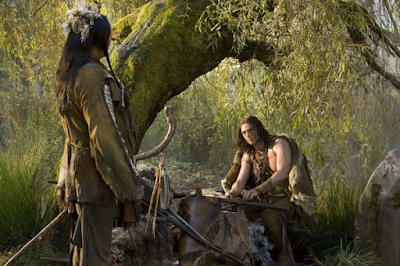
If ever there was a movie deserving of being pulled from the cobwebs, it's 20th Century Fox's Pathfinder: the Legend of the Ghost Warrior, an icy and pulp, Middle Ages epic that pits Vikings against indigenous, North American opposition (six centuries before Christopher Columbus' expeditions), directed by Marcus Nispel and scripted by Laela Kalogridis (based in part on a 1987, Norwegian submission, which in its own right was founded on Sami myth). 

The stalwart hero of this 2007 theatrical, sword-and-moccasin release is portrayed by Karl Urban, who has earned accolades among viewers for his extensive appearances in imagi-productions, which include Dredd (in the judgmental lead, no less); Lord of the Rings (the Two Towers and Return of the King); the Boys (two seasons so far); Xena, Warrior Princess (various installments and characters); Doom; Priest; Red; Ghost Ship; the Irrefutable Truth About Demons; Riddick and the Chronicles of...; Thor: Ragnarok; and three, J.J. Abrams-produced Star Trek features (as the cantankerous yet congenial Leonard "Bones" McCoy). Indeed, Urban's film-hero status should be enough to inspire fans to disinter Pathfinder, if only they cared. 

To stir the movie's valorous pot further, Pathfinder includes two, additional imagi-movie thespians: Clancy Brown of Highlander; the Bride; the Adventures of Buckaroo Banzai; Carnivale; Starship Troopers; Thor: Rangnarok; and Pet Sematary Two and Ralf Moeller, best known as the eponymous barbarian in Conan the Adventurer; the Viking Sagas; Gladiator; the Scorpion King; and Cyborg.

But these headlining costars are not the only draw. Pathfinder presents a clear-cut vision, which combines elements of A Man Called Horse and Death Wish with the thunderous works of Robert E. Howard and David C. Smith.

The story opens with Vikings arriving in America to pillage a small tribe called the Skaeling. In the bloody skirmish, a Viking boy is abandoned by his father after he refuses to kill the innocent and in a roundabout Tarzan homage, is raised by the compassionate natives.

Ghost becomes the youngster's name due to his pallid appearance, and through Urban, the character morphs into an agile,  noble entity, even if his tribe never quite accepts him in the way it does its other warriors. This makes Ghost an underdog and as such a man who, though respected on the fringes, must still prove himself to sustain the unfettered lifestyle he has come to know.

Ghost loves a fair maiden named Starfire, portrayed by Moon Bloodgood, whose father is the tribe's pathfinder. A pathfinder is a human compass imbued with spiritual insight that can lead one toward a better existence, if one should so choose to accept such prophetic guidance. Starfire is a pathfinder in wait, but her chance to reach spiritual fruition is hampered when the Vikings (aka the Dragon Men) return to plunder.

Leading the voracious vanguard is Brown's armored Gunnar, a giant whose purpose is to slaughter those he considers savage (in other words, something less than himself). He dismisses Ghost's Norseman connection, and Ghost's faithful, tribal bond makes any compromise impossible. This leads to a seething, symbolic, cultural clash that skids toward a harrowing, cliffhanger conclusion. 

Prior to its breathtaking melee, other characters inject viciousness and tenderness. Moeller's Ulfar is an adversarial catalyst for the initial category, representing the enemy's callousness to a tee. On the opposite end, the endearing combination of Means' Pathfinder and Bloodgood's Starfire are as important, for they show another side to the dilemma, defining motivation to combat such brute, so that he may harness the serenity that his family bestows. This component is ironic, but because of it, Ghost's path makes perfect sense, since there comes a point when one must wage war to keep peace. (Duane Howard as Elder, Kevin Loring as Jester, Jay Tavare as Blackwing and Nathaniel Arcand as Wind in Tree perform an admirable service establishing the tribe's focused, supporting members and instill a worth-dying-for sense of community.)

To bolster all this, the plot's structure is swift, simple and emotional, its backdrop lofty and craggy in the Frank Frazetta/Boris Vallejo vein, while Jonathan Ellis' score and Daniel Pearl's cinematography pump the impassioned intensity. This puts Pathfinder on a par with the mountainous scope of John Milius' Conan the Barbarian and Michael Mann's the Last of the Mohicans, with many sequences looking as though they have been torn straight from pulp and comic publications. (Incidentally, it should come as no surprise that director Nispel ended up helming a 2011 remake of the former.)

And yet despite its calamitous splendor, Pathfinder has failed to land a cult following. From the outset, this could have been due to its release within the proximity of Zack Snyder's more publicized 300. However, when it premiered on disc and cable, Pathfinder received the same muddled indifference. Pathfinder's Rotten Tomatoes score is a dismal thirty-six percent, but then if one delves into the Tomatoes blurbs, it becomes clear that diehard genre fans (those who understand the finer intricacies of this type of fiction) are scarce in their collective expression. It is that serious sect which could elevate Pathfinder to prominence. 

As a shrewd case in point, critic Cynthia Fuchs of Common Sense Media offers an accurate assessment of the film: "Boasting a prettified brutality that rivals 300, Pathfinder also explores a similiary basic them: manly men pursuing revenge at all cost."

She is correct, and the film's content serves its purpose well. Pathfinder, like 300 and Ralph Bakshi/Frazetta's Fire and Ice, is an ideal, adrenalin-packed production and all thanks to it unpretentious, virile displays, which become even more provocative when one views its unrated edition. In either form, the film could act as an antidote for a current, timid age. In this regard, prissy Potterheads and Disney-princess worshippers will not like it in the least, but for those who relish blunt, bestial zeal--for those nauseated by hollow Mary Sues and unrealistic, Cancel Culture infallibles--Pathfinder presents nothing short of a kick-ass salvation: a sword-severing, Urban-led sojourn where struggles run high and an outsider has the actual audacity to save the day through principle and perseverance. 

Friday, September 4, 2020

An Alternate Reality: The Boys are Back In Town (Season 2 Starts)

In a time when cowardice is proclaimed the equivalent of courage (wanna debate, anyone?), stimulus checks hang in limbo and Neo-Nazi adages infiltrate schoolroom sorcery, "The Boys" makes perfect sense. What's right? What's wrong? What goddamn difference does it make?

Actually, it makes a ton of difference, for the reliable thread of Amazon's show (based on Garth Ennis/Darick Robertson's DC/Vertigo comic-book series) is to seek, confirm and expose the truth (discern virtue from deceit). Season 2 (of which there are now three episodes to view, with more to arrive on following Fridays) continues that tradition, toying with concepts found in such aligned works as "Watchmen" and "Brightburn". 


As should be no surprise, what manifests is disturbing and dark-humored, but more so the former than the later: mostly it's messy like some drawn-out splatter effect in an H.G. Lewis flick. How could the sentiment be otherwise, with an emblematic protagonist who's really an antagonist, even if he does sport the sacred designs of Kal-El and Steve Rogers. (He's called Homelander, by the way, and played by the versatile Anthony Starr; and his prime elbow-rubber in "heroics" is Dominique McElligot's Queen Maeve, a stunning, alternative-lifestyle Wonder Woman knockoff, though maybe not quite as ethical as her inspiration. Get the picture?) 


Right off the bat, Season 2 hits its dubious, Supe Seven ball right out the park, sailing it into foreign lands, for it appears that these uber-fueled individuals are global pawns for an implied "Rollerball", each created more to please their masters than protecting the common citizenry. In other words, the good-guy-vs-bad-guy angle is a lark, except that there are genuine good guys in this twisted plot. They're just popped-out-of-the-womb humans, unlike the callous, Compound V phonies they wish to defame. (For a wee tit-for-tat, the sides sometimes blur, thanks to Giancarlo "Breaking Bad/Saul" Esposito's Mr. Edgar, who isn't afraid to remind Homelander of his synthetic flaws {and foibles}; Aya Cash acts as the boss' outspoken {and therefore down-to-earth?} Storm-inspired Stormfront; and Chase Crawford's doleful Deep milks big-time empathy, for we all know a Supe isn't really rotten if he sheds mere-mortal tears.)


Karl "Dredd" Urban portrays the real-deal, head-honcho good guy, Billy Butcher. He's an embittered, Bondian Batman/Punisher of sorts (even though Nathan Mitchell's Black Noir might, in fact, occupy that part) and administers white-knuckled virility into his crusade to bring the Supes down. As such, he and his "boys" (played by Jack Quaid, Karen Fukahara, Tomer Kapon and Laz Alonzo) are labeled as bad, if only for fake-news differentiation.  


So far, Season 2 doesn't seem as shocking as the first (the series' established harshness is too familiar at this point), but its morbidity still proves entertaining in its expected, warped way. 


I generally don't like shades of gray in my action/adventure sagas (case in point, Kathleen Kennedy's reconstructed "Star Wars" or the way AMC's "Preacher" turned out: the latter, incidentally, culled from another Ennis title, also co-produced by Seth "Green Hornet" Rogen). "The Boys", however, at least attempts to distinguish good and bad with a deeper line drawn in the sand and a little Billy Joel to give it a healthy second wind. 


For me, it's all part of the concept's specialized scheme, and as long as the meticulous balance prevails, I'll be accepting of the good, the bad and the ugly, maybe even enough to look forward to the preordained Season 3. 

Thursday, August 1, 2019

I saw the Boys...


Due to writing/work assignments, I was tardy for "The Boys": Amazon Prime's adaptation of the Dynamite Comic series by Garth Ennis and Darick W. Robertson. In truth, "The Boys" is a companion to DC's "Watchmen" and Flaming Carrot Comic's "Mystery Men", blending the anxiety and wry humor of both titles. (In addition, the series offers elements of "Batman v Superman" and the horror-tinged "Brightburn".)  


I'm proud to report that I absorbed all eight episodes of the series this past week. The installments kept me engaged, even if I found the collection's slant disturbing. Hey, high carnage and a blatant lack of morals will do that to me...heck, anybody with a conscience.


But its merciless roughness is its point. It's not supposed to be nice and pretty. It shows naked corruption at the top...the superhero top, that is. That makes the concept an allegory for police corruption, I guess, but all the same, I wouldn't call it "Serpico". Frank Serpico was a good cop desperate to expose the bad ones, and yet it does seem that the Karl "Dredd" Urban's unforgiving Billy Butcher follows a similar moral track, uncovering some venomous, steroid stuff along the way. Thing is, will he be able to reveal the catastrophic Compound V for all the world to see? As with Serpico, the odds sure don't favor success (and to boot, there's an ugly, personal secret to accompany Butcher's revelation), and yet...


In any event, Butcher works for the Boys (and thus the title), a CIA offshoot...well, in the comics that the way it plays, anyway.  In the series, Butcher works in a more select manner, choosing only those indignant enough to usher his cause, such as the devout Billy Joel fan, Hughie Campbell (Jack Quaid), whose girlfriend (Jess Salguiero) became "collateral damage" due to the Flashy and unheeding A-Train (Jesse Usher). 


To complement Butcher's members, we get Campbell's practical, if not misguided dad (Simon Pegg); Frenchie (Tomer Kapon), an arsenal-stacked outsider; Cherie (Jordana Lajoie), Frenchie's sexy significant other; Mother's Milk (Laz Alonso), the gang's voice of reason; Grace Mallory (Laila Robbins), Butcher's inspiration and catalyst behind the Boys; CIA agent Susan Raynor (Jennifer Esposito), Butcher's officious confidant who's wise to the Compound V saturation; and Madelyn Stillwell (Elizabeth Shue), the head of Vought, a company that promotes and designs "Supes" for political profit. (For the record, Billy "the Phantom" Zane cameos as himself, which is neat. Too bad, though, there wasn't more of him. Then again, too bad he never got to play the Ghost Who Walks more. Actors of his caliber should never go to waste with such grand opportunities at hand.)


Among the superleaguers, we're treated not only to A-Train, but his alluring, love interest, Popclaw (Brittany Allen), a naive Lady Deathstrike, and a lightning-speed competitor, Shockwave (Mishka Thebaud). There's also Deep (Chace Crawford), a morally soggy Aquaman/Sub-mariner; Black Noir (Nathan Mitchell), a hushed, Black Panther understudy; Translucent (Alex Hassell), a perverted Invisible Man; Ezekiel (Shaun Benson), a puritanical and hypocritical Mr. Fantastic; Mesmer (Haley Joel Osment), a mind reader supreme; Kimiko/the Female (Karen Fukahara), a lethal lass with terrorist ties; Queen Maeve (Dominique McElligott), the resident Wonder Woman; and the reputed, greatest crusader of all time, Homelander (Anthony Starr), a Superman/Cap America surrogate, who though garbed in Old Glory doesn't embody truth, justice or the meaning of the flag. (In addition, there's an oft referenced, but never seen-in-the-flesh gent called Lamplighter: a sour chip off the ol' Green Lantern block.)


Starlight (Erin Moriarty) is the new Supe recruit, who's at first eager to serve, but soon questions her coworkers' motives after Deep harasses her at work. (She's also gets tight with the heartbroken Campbell, which makes her not only humble but identifiable.)


Like "Watchmen", "The Boys" is in constant search to right wrongs and expose lies. Starlight is a valiant exception to her team's blinders-on stances, but Butcher serves much the same soul-searching purpose: a pedestrian cross between Batman and James Bond (with perhaps a spicing of Rorschach and Wolverine), investigating anything that looks or feels in the slightest off-kilter. Though he's not a genuine Supe, he's still a staunch throwback to the earliest comic-strip and pulp icons: a man who works outside the system to mend it.


Even with that said, I've a hunch that the producers of "The Boys" (which includes Seth "The Green Hornet" Rogan) probably hold different views than my ilk when it comes to what makes an authority figure bad. In other words, I don't expect this series (presuming it continues) to offer an allegory on why charity funds evaded the Haitians. (Shed a damn tear for that, Anderson Cooper! Ha!) 


Nevertheless, "The Boys" remains open for interpretation, with its leads wavering within an ethical spectrum. One can press any their  ideas upon its characters, who act as substitutes for any number of real-world officials, regardless of their political or religious affiliations. The viewer has the choice to decide who's who and what's what. 


This makes "The Boys" daring enough (maybe fruitful enough) to pursue for any jaded comic-book connoisseur. As long as its sequel(s) stick to this track, the concept will gain popularity. However, if it ever dares to polarize (like Amazon's "The Tick", AMC's "Preacher" or CW's gag-me-with-a-spoon "Supergirl"), it'll likely crawl into a damning, elitist niche: a cult favorite to some, but an insult to others. Let's hope it stays where it is, expanding its audience instead of restricting it.